
Events
The UNESCO Chair “Water Heritage and Sustainability” organizes regular events, lectures and webinars.
In collaboration with NICHE, it organizes the Waterscapes series of workshops and talks (contact person: Erasmo Castellani).
In 2023, in collaboration with the Max Planck Institute for Geoanthropology, Jena, it launched the Cross Currents meetings as a forum of cross-disciplinary and cross-cultural studies on hydro-sociology.
In cooperation with the Global Network of Water Museums (WAMU-NET) and Civiltà dell’Acqua International Centre, it organized a series of lectures and webinars from 2021 to 2023. Webinars are addressed to scholars, researchers, professionals in the fields of water studies, as well as the staff of water museums.
2-7 February 2026
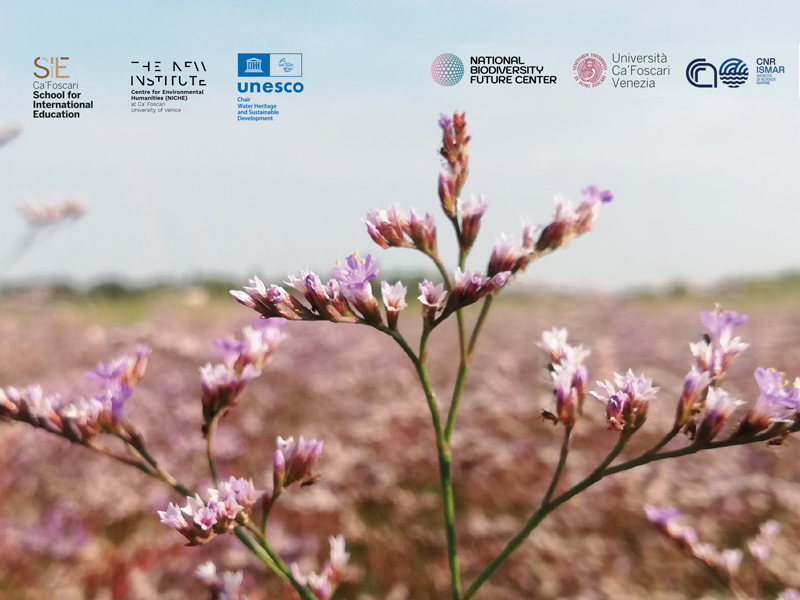
Winter School on Interdisciplinary Biodiversity (School for International Education at Ca' Foscari (CFSIE), in collaboration with the Institute of Marine Sciences of the National Research Council (CNR-ISMAR), and promoted by the National Biodiversity Future Centre (NBFC) (Corinna Guerra)
The reduction of biological diversity impacts the functioning of natural ecosystems, the balance of the planet, and the organisms that inhabit it. However, the term biodiversity is often used merely as a slogan in political, social, and even scientific discussions. So, what exactly is biodiversity? How can we measure changes in it? What are its effects on human health, food production, and energy? How is it regulated by law? The Winter School in Interdisciplinary Biodiversity addresed these and related issues. Coordinated by Corinna Guerra, Historian of Science, the Winter School focuses on the theme of biodiversity through an interdisciplinary approach. It brought together experts from various fields, including biology, climate studies, social sciences, and economics, and welcomed participants from diverse academic backgrounds.
15-17 December 2025
Shared Waters: Intangible Water Heritage and Sustainability
From 15 to 17 December 2025, the conference “Shared Waters: Intangible Water Heritage and Sustainability” took place in the meeting room of Caorle’s fish market, an emblematic location directly linked to the themes of the event.
The conference explored Intangible Cultural Heritage (ICH) associated with water by interweaving environmental and social perspectives, revealing the deep entanglements between cultural practices and wetland ecosystems.
In response to the threat that climate change poses to water cultures, and in line with the UNESCO Convention concerning the Protection of the World Cultural and Natural Heritage (1972) and the UNESCO Convention for the Safeguarding of the Intangible Cultural Heritage (2003), the project aims to document, protect, and valorise, from an eco-cultural viewpoint, water ICH—water practices, representations, expressions, knowledge, and skills that constitute communities’ cultural heritage—by offering a multi-dimensional overview of their manifestation through vernacular traditions (written and oral), social practices, environmental knowledge, artistic expressions, and traditional craftsmanship. Such practices include an invaluable array of measures of resilience, mitigation, and adaptation to environmental change, developed, preserved, and passed on for generations through shared experiences and oral communication. In other words, they constitute an asset for sustainability.
The conference focused on five thematic areas:
- Mapping crosscultural sites of water ICH;
- Strategies of preservation and valorisation of water ICH as a pillar of societal and ecological resilience, including technological, communication and policy-making infrastructures;
- Recognition of water ICH at national and international levels;
- Transferability and adaptation of water ICH across regions and cultures to support
climate adaptation, sustainability, and shared stewardship of common resources; - Regional policy frameworks for the integration of water ICH into broader networks of citizenship, governance, and education.
Speakers and contributors represented a broad range of local, national, and international institutions, including: Ca’ Foscari University of Venice – NICHE / UNESCO Chair Water Heritage and Sustainable Development, Bezalel Academy of Arts and Design Jerusalem, CNRS – French Institute of Pondicherry (France/India), Universidad Nacional Autónoma de México, University of Warsaw, ETH Zürich, Andros Research Centre, Plateforme TranSborder, WeDo Project intelligence made easy, CMCC Foundation (Euromediterranean Centre on Climate Change), CNR-ISMAR, independent videomaker Matteo Stocco, and VeGAL (Eastern Veneto Local Action Group).
The programme also featured a public session in Italian, an excursion to a Casone (a traditional fishers’ reedhouse), and a guided visit to Caorle’s Museo Nazionale di Archeologia del Mare.
Venice, Italy 9–11 June 2025
This interdisciplinary conference aimed to advance the conceptual development of geoanthropology, an emerging epistemological framework in which Earth system science encountered the humanities and social sciences. Grounded in the Anthropocene debate, which had highlighted the urgency of overcoming antagonisms between disciplines, geoanthropology accepted the importance of such concepts as planetary boundaries, geological markers, and earth states while integrating them with the theory and history of phenomena such as extractivism and technology, biopolitics and exploitation, and modernity and legal thought. Although this was a promising and ambitious epistemological undertaking, further conceptual development was needed before geoanthropology could become an established research paradigm.
The conference’s objective was to explore the relevance of three concepts for the geoanthropological framework: metabolism, legal imagination, and geopraxis.
Keynote Speakers
Nigel Clark (Lancaster University)
Xenia Chiaramonte (Ca’ Foscari University of Venice)
Kohei Saito (Tokyo University).
Conference “Geoanthropology” website.
9-12 July 2025
“La risorsa Acqua: dalle Dolomiti al Mare – I ghiacciai e la loro conservazione”
From 9 to 12 July 2025, the meeting “La risorsa Acqua: dalle Dolomiti al Mare – I ghiacciai e la loro conservazione” was held at Rifugio Pietro Galassi at Forcella Piccola dell’Antelao (CAI Mestre).
This extraordinary location in the heart of the Alps hosted presentations from numerous local and national institutions and research groups, among others: Comune di Venezia, UNESCO World Water Assessment Programme, CAI, CNR, CNR-ISP, Consorzio Acque Risorgive di Bonifica, Europe Direct Venezia, ARPAV, Università IUAV di Venezia, Università degli Studi di Padova, Fondazione Capitale Mondiale della Sostenibilità, Mitilla – Soc. Agricola F.lli Busetto, IZSP Venezie, Ufficio Regionale UNESCO per la Scienza e la Cultura in Europa. Among the various activities, we had the opportunity to go on an excursion from Forcella Piccola along the normal route of Mount Antelao, accompanied by two botanists from the Fondazione Museo Civico di Rovereto, who introduced us to summit flora and its relationship
with climate change. The UNESCO Chair Water Heritage and Sustainable Development, represented on 11 July by Omar Rodriguez Camarena and Francesca Rosso, contributed with the presentation “Water Heritage and Sustainable Development: l’acqua come patrimonio materiale e immateriale e il suo ruolo nello sviluppo sostenibile.” On 12 July, Corinna Guerra delivered the presentation “L’acqua e le scienze umane ambientali” which preceded the concluding workshop for students titled “Giovani e videomaking.”
2026
- January 13
Omar Rodríguez Camarena (UNAM, Mexico City, Mexico)
Hydropolitical Epistemology in the Basin-Valley of Mexico. From the Inventio of Modern World to Current Socio-Natural Dilemma - February 10
Francesco Danesi della Sala (Università Milano-Bicocca)
Imagining Beyond the Human: Politics and Poetics of an Amphibious Ecology - March 10
Paolo Gruppuso (Rachel Carson Center for Environment and Society - LMU Munich
Rethinking Wetlands. Towards a Wetland Anthropology
2025
- January 14
Ingar Stene - From Ice to Ink: Interpreting Frozen Waters, Life and Climate in Early Modern Greenland - February 4
Conference - Historical perspectives on risk and sustainability - March 11
Simone M. Müller and Elijah Doro - Science and Politics on the Management of Polluting Water Resources - April 1
Jessica Puliero - Ontolagoon: developing a digital ontology of the fishing lexicon in the venetian lagoon - April 2
Stefan Helmreich - NewBooks | Ocean Waves, Ocean Science, Ocean Media
2024
- January 16
Roberta Biasillo - Conflicts without Transformation: History of the Pontine Marshes from Italian Unification to Total Reclamation (1871-1928) - February 22
Stefan Schäfer, Damien Bright, Gretchen Bakke, Marianne Pascale Bartels - Industrial Waters and Local Futures - March 5
Giorgio Andrian - Water Diplomacy and the role of UNESCO - April 16
Jeffrey McCarthy - Re-envisioning the Anthropocene Ocean - May 14
Serafina Cuomo - Water management in Ptolemaic and Roman Egypt: a knowledge from below approach - October 1
Rachel Gottesman - Boiling Point: Body Culture at the Fringe of Empire - November 5
Erin Putalik-Amina Chouairi - We All Might Inhabit Margins: Localizing the Planetary Salt-Marsh - December 3
Guillermo Collado Wilkins - Waterscapes of Control: Technocracies from Extractivism to Sustainability - December 16
Isabelle Elizeon - Multiple Perspectives on Venice in the Anthropocene: An Audiovisual Exploration
2023
- April 18
Maddalena Bassani and Fantina Madricardo - Crossing Waters: A Cross-Disciplinary Approach to the Venice Lagoon - May 23
Ludovica Galeazzo - Venice’s Aquascape: The Islands of the Venetian Lagoon in a Geo-Spatial Infrastructure - June 20
Nicola Di Cosmo - Floods and Dynastic Change in Seventeenth-Century China: A Case Study - September 19
Pania Mu - Make the Water Flow: Hydraulic Mappings in the 17th-19th Centuries Suzhou
Eli Elinoff - City Impermanent: Watery Speculations in Thailand’s Sinking Capital - October 17
Emiliano Guaraldo - Italian Narratives of Extractivism in the Niger Delta - October 23
Milinda Banerjee and Krešimir Vuković - Wolves of Rome and the Subaltern 2.0: Multispecies Politics in the Anthropocene - November 6
Veronica Strang - The Anthropology of Wonder: Exploring Human Responses to Water and Light - November 28
Dario Padovan - Weaponizing Nature. Water, food and energy in the context of civil and global wars - December 19
Full-day workshop: The Hydro-Sociology of the Grave di Ciano on the Piave River
Cross Currents is a series of conferences in collaboration with the Max Planck Institute of Geoanthropology, Jena.
The first conference was held in Jena, at the Max Planck Institute of Geoanthropology, from 5th to 7th July, 2023.
Crosscurrents investigates historical waterscapes from a historical and cross-cultural perspective. Waterscapes transformation, especially through their constant engineering, aims to secure various social uses of water (access to drinkable water, agriculture, health, transportation, energy, defense, recreation), has always rested on complex forms of ecological, social and cosmological knowledge. Land surveying and cosmographic knowledge, including astronomy, have always played an entangled role, although the scientific activity of the agrimensor (or land surveyor) and the astronomer/cosmographer have often been segregated in accordance with epistemological and social divisions of labor.
Medieval and early-modern India is a case in point, as the mathematical practices connected with astronomy and surveying were organized alongside caste and linguistic separations. In early-modern Europe, the practices of water management, hydrology, territory mapping and cosmological inquiry often merged, in line with political and economic drivers of productivity, control and efficiency.
In early-modern Venice, cosmological knowledge constituted an essential basis for territory management and waterscapes architecture, as is witnessed by the scientific activity of the water officers of the Republic of Venice on matters as varied as territory mapping, tidal studies, and eco-hydraulic engineering (canalization, coastal areas interventions, lagoon management, fishing regulations).
European early-modernity also witnessed the rise of new mixed intellectual-practical professionals, in line with the requirements of a process of societal restructuring (marked by technological innovations, capital-oriented forms of investment, novel forms of land and labour valuation, and colonial expansion).
In this context, of an increasingly interconnected modernity, the commonalities and specificities of water-and-territory scientific practices can only be understood through historical and comparative studies.
The case of Mexico City, former Aztec capital Tenochtitlan, shows the parallel and different evolution of an island-city that has been transformed in a very different direction than Venice for different geoengineering and political decisions on the part of the Hispanic colonizers and the post-colonial engineers.
More comparative studies are necessary: the socio-political history of Chinese rivers management ought to be carefully considered, too. This research line in historical geoanthropology aims to strengthen a productive interdisciplinary and crosscultural exchange among scholars on questions of environmental history, water heritage, and sustainable development. The theoretical framework will also be addressed. It addresses crucial questions of historical geo-anthropology, conceived of as an environmental development of historical and political epistemology.
The second series of lectures and webinars organized by the UNESCO Chair in cooperation with THE NEW INSTITUTE Centre for Envrironmental Humanities (NICHE) at Ca’ Foscari University of Venice took place from 29 September to 6 December 2022. Among the different scholars and practitioners invited for this year, the pioneering water anthropologist Veronica Strang (Durham) gave a keynote lecture on indigenous water beings and multi-species democracy.
In connection with this year's World Water Day theme dedicated to Groundwater - entitled 'Making the Invisible Visible', the side event organized within the UN-Water Summit on Groundwater in Paris and the 4th International conference of water museums complete the educational offering for 2022.
Specific lectures focused on the following topics: ancient knowledge and hydro-technologies; cosmological and legal frameworks; sustainable groundwater management.
This year’s series is organized in cooperation with the UNESCO Chair on ‘Rivers and Heritage’ (University of Tours, France), the UNESCO Chair on ‘Water and Culture’ (University of the Republic, Montevideo, Uruguay) the ERC grant ‘Water Cultures – The Water Cultures of Italy 1500-1900’ at Ca’ Foscari University of Venice, and the Global Network of Water Museums (WAMU-NET).
The planned lectures were held in English, Spanish, and French.

11th October 2022

University Ca' Foscari of Venice, UNESCO Chair holder, Italy
University of the Republic, UNESCO Chair holder, Uruguay
18th october 2022
University of the Republic, UNESCO Chair team member, Uruguay
Uniersity of the Republic, Uruguay
26th October 2022
Lahcen Kabiri and Oasis Ferkla
Moulay Ismail University and Association for Environment and Heritage, Errachidia, Morocco
Video-presentation 26/10/2022
Polytechnic University of Catalunya, Barcelona, UNESCO Chair coordinator, Spain
IRD Montpellier, France and University of Agadir, Morocco
University of Nice, France
University of Nizwa, UNESCO Chair, Oman
18th November 2022
25th November 2022
6th December 2022
University of Venice, UNESCO Chair coordinator, Italy
Rector of the IHE, Delft, Netherlands and President of the WAMU-NET
IGRAC - International Groundwater Resources Assessment Centre, Delft, Netherlands
Universidad Polytecnica de Catalunya, Barcelona, UNESCO Chair holder, Spain
Ca’ Foscari University of Venice, Italy
Living Waters Museum, India
CIRAD, Algiers, Algeria
University of Limoges, France
University Ca' Foscari of Venice, UNESCO Chair holder, Italy
The first training course organised by the Chair was held online in form of a webinar series and focused on different tools, strategies and good practices aimed at promoting water heritage outside museums.
The course included 12 webinars and 24 highly qualified speakers from different nationalities. It run on Zoom every Friday from 13.00 to 15.00 CET starting from the 22nd of October and until the 21st of January 2022.
During the course, the following topics were presented and discussed: inland hydrography, riverscapes and urban waterscapes; reading and interpretation of ancestral technologies; heritage mapping and digitization; itinerary design and digital audioguides; methodologies to build participative approaches for enhanced water management; eco-museums and community-led water museums; visual anthropology, collection of oral histories and video interviews; water as sustainable tourism resource; engaging audiences outside museums.
22nd October 2021
Ca' Foscari University of Venice, UNESCO Chair holder, Italy
UNESCO Chair coordinator, Italy
29th October 2021
5th November 2021
UNESCO chair “Agua y cultura”, Montevideo, Uruguay
Living Water Museum, India
12th November 2021
- Please visit the dedicated page WHEN WATERS SPEAK #3- Water Walks.
19th November 2021
University of Florence, Italy
Leicester University, UK
26th November 2021
3rd December 2021
10th December 2021
HYDRIA, Greece
Action Aid Bangladesh
17th December 2021
Ecomuseum of Martesana, Italy
MUSE-Science Museum Trento, Italy
7th January 2022
Politecnico di Milano, Italy
Ca' Foscari University of Venice
14th January 2022
21st January 2022