

Social Innovation

Research Institute for Social Innovation
Public governance, welfare and social innovation
Addressing social exclusion, discrimination and various forms of inequalities is a crucial challenge for the future of Europe and its citizens. The understanding of rapidly changing multicultural and multilingual societies requires a cross-disciplinary approach, spanning across the social sciences and humanities, and including law and ICT, to address issues such as gender equity and diversity, access to education, accessibility and disability rights, health and social welfare, labour markets, active ageing, demographic change, family and children protection, consumer protection, and sustainable company law.
Research on these themes benefits from innovative tools such as social innovation, a trans-disciplinary concept increasingly applied to a range of fields with the ultimate goal of removing barriers to participation in society, reducing inequalities, and promoting integration, inclusion and justice and healthcare by means of well designed public policies.
Keywords
Accessibility for inclusion, Active ageing and demographic change, Active citizenship, Agent-based models, Behavioural economics, Collective identities, Decision sciences, Education policy, Gender equality, Health economics, Inclusion and fairness, Inequalities, Integration, Intercultural relations, Long term care, Policy evaluation, Protection of rights, Smart cities and communities, Social innovation, Translation studies, Transnational history, User-driven innovation, Well-being
Coordinator
Research facilitator
- AGOSTINI Marisa
- BARBIERI Elisa
- BARBIROTTO Patricio Ignacio
- BASOSI Duccio
- BATTAGLIA Sveva
- BERNES Alessandro
- BERTARELLI Gaia
- BONESSO Sara
- BRUGIAVINI Agar
- BUSACCA Maurizio
- CAMPOMORI Francesca
- CAMPOSTRINI Stefano
- CESIRI Daniela
- CIMINO Francesca
- CORTESI Agostino
- CRODA Enrica
- CRUCIANI Caterina
- DA ROIT Barbara
- DASGUPTA Shouro
- DE VIDO Sara
- DELLA PUPPA Francesco
- FAVERO Giovanni
- FAZZI Fabiana
- FINOTTO Vladi
- G. SALES Vilane
- GAROFALO Giulia
- GEROLIMETTO Margherita
- GIANNINI Valentina Luisa
- GOLFETTO Giorgia
- JACOMUZZI Alessandra Cecilia
- LANZINI Pietro
- MARCHETTI Sabrina
- MARZULLI Michele Maria
- MATUTINI Elisa
- MILAQI Amanda
- MINTO Giulio
- MIYAKE Toshio
- MONTUSCHI Eleonora
- MORELLI Marianna
- MORETTI Anna
- MOSCONE Francesco
- NADAL Deborah
- ORLANDO Salvatore
- PASIAN Pamela
- PASINI Giacomo
- PEROCCO Fabio
- PESENTI Raffaele
- PORCHIA Stefania
- RUSSO Salvatore
- SCANTAMBURLO Teresa
- SHKOPI Eriselda
- SILVESTRI Claudio
- SOUKAND Renata
- SPALIVIERO Camilla
- STOCCHETTI Andrea
- TOMASELLO Federico
- TRENTANOVE Federico
- TZVETKOVA Gergana
- ZILIO-GRANDI Gaetano
- ZIRPOLI Francesco
High-impact and award-winning projects
I-CLAIM: Improving the living and labour conditions of irregularised migrant households in Europe
The project investigates the living and working conditions of irregularised migrant households in Europe from an intersectional perspective. It aims to reveal the spectrum of irregularity in contemporary Europe and cast light on the everyday experiences of migrants with irregular, unstable and/or precarious legal status. I-CLAIM develops the concept of 'irregularity assemblages' to capture how migrants' 'irregular condition' is produced by the interplay of immigration and asylum laws, policies and practice, wider labour market and welfare regimes, and political, media and public narratives. The irregular condition is shaped by migrants' social position and positionality as well as by processes that occur at international, European, regional and local levels. This approach will inform our theoretical understanding, methodology and analytical framework. Moreover, it enables us to design, assess and validate detailed policy options and public interventions targeted at place-specific, sectoral, and intersectional criticalities and vulnerabilities experienced by a range of people in irregular situations in Europe. To achieve its overarching ambition, we will engage at all stages of the project cycle with relevant European, national, local and sectoral actors in six countries (Finland, Germany, Italy, The Netherland, Poland and the UK).
Website
Researcher: Sabrina Marchetti
Duration: 01/04/2023 - 31/03/2026
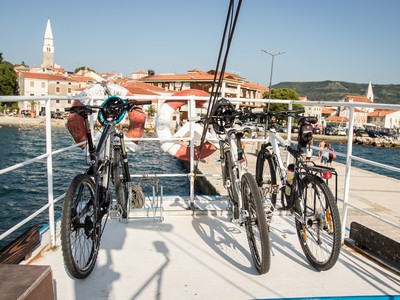
CROSSMOBY: planning intermodal, cross-border and sustainable public transports
CROSSMOBY aims to improve sustainable mobility planning and provide cross-border public transport connections, while also reducing transport emissions by testing new rail passenger services as well as other pilot services for passengers; thus creating a new approach to mobility planning based on the existing PUMS (Urban Sustainable Mobility Plans) methodology. The project contributed to the reactivation of the cross-border rail passenger services and the creation of several pilot services for passengers, and the cross-border strategic action plan on sustainable mobility. It is the first project bringing such results in the Italy-Slovenia cooperation programmes.
Website
Researcher: Andrea Stocchetti
Duration: 01/09/2018 - 31/08/2021
Funding: Interreg V-A ITALIA SLOVENIA 2014-2020
VULNER - Vulnerabilities under the global protection regime
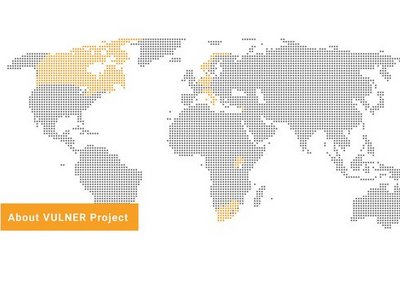
How does the law assess, address, shape and produce the vulnerabilities of the protection seekers? 'Vulnerability' is increasingly used as a conceptual tool to guide the design and implementation of the global protection regime, as illustrated by the 2016 New York Declaration for Refugees and Migrants and the subsequent adoption of the Global Compact for Safe, Orderly and Regular Migration and of the final draft of the Global Compact on Refugees. However, 'vulnerability' lacks a sharp conceptualisation and still needs to be accompanied by a thorough understanding of its concrete meanings, practical consequences and legal implications. This research project aims to address these uncertainties from a critical and comparative perspective, with a focus on forced migration. It will provide a comprehensive analysis of how the ‘protection regimes’ of select countries address the vulnerabilities of 'protection seekers’' The select countries are in Europe (Belgium, Germany, Italy, Norway), North America (Canada), the Middle East (Lebanon) and Africa (Uganda and South Africa).
Project website / EU Cordis database
Researcher: Sabrina Marchetti
Duration: 01/02/2020 - 31/01/2023
Funding: Horizon 2020 Societal Challenges - Europe In A Changing World

SoMe4Dem: Social media for democracy – understanding the causal mechanisms of digital citizenship
Current diagnoses that democracy is in crisis at the beginning of the 21st century share a common argumentative reference point: the (implicit) reference to the dysfunctional constitution of the political public sphere which is currently undergoing structural change. The rise of social media platforms is considered as one of its main constituents. While social media make the public arena more open and thus more responsive, these platforms also lead to new mechanisms of fragmentation and exclusion, an erosion of norms in public debate and a loss of trust in traditional institutions. The project will reconsider the diagnoses of this crisis by (1) providing better empirical evidence for the impact of social media on society with respect to political debates, (2) understanding the main causal mechanisms of this impact and (3) developing tools that improve the capacity of social media to contribute to the functioning of the public arena in a liberal democracy, i.e., deliberation, legitimation and the self-perception of the democratic subject.
Project website / EU Cordis database
Researcher: Caterina Cruciani
Duration: 01/03/2023 - 28 /02/2026
Funding: Horizon Europe - Culture, creativity and inclusive society
MORE - Motivations, experiences and consequences of returns and readmissions policy
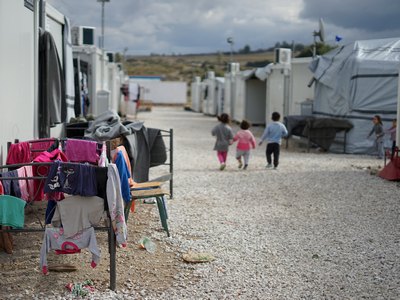
In recent years, the Returns and Readmissions policy has become the preferred solution for the EU and its member states to address migrants living in situations of irregularity. Yet, different actors have raised concerns over the lack of effectiveness of the policy, violations of migrant’s fundamental rights associated with its implementation and the dependency on third countries for its application. In the first phase of the project, MORE (Motivations, experiences and consequences of returns and readmissions policy: revealing and developing effective alternatives) will provide an exhaustive analysis of the development of the policy and its supporting evidence to understand why it has become a preferred solution and why it has been understood to be ineffective. In parallel, the project will examine the development, rationale, objectives, supporting evidence and implementation for 6 alternative policies that are or have been implemented in EU member states and the UK. The project will look at when and why these are or were implemented and why they have not become the main response to situations of administrative irregularity among migrants in the EU.
Website
Researcher: Fabio Perocco
Duration: 01/10/2023 - 30/09/2026
EXIT - Sustainable strategies to counteract territorial inequalities
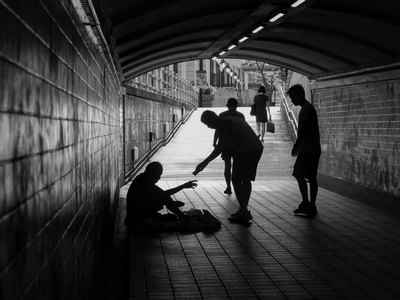
The redrawing of social inequalities across Europe during the last few years includes both a retrenchment of longstanding inequalities among countries, and the emergence of new disadvantages, together with an erosion of the status and protections previously enjoyed by most citizens within them. This is particularly prominent from a geographical perspective as spatial inequality grows within regions. Despite overall country level economic growth, certain regions are experiencing long-term socioeconomic stagnation or decline. These areas have been often characterised as 'left-behind'. Yet, little is known of what drives ‘left-behindness’. The project EXIT (Exploring sustainable strategies to counteract territorial inequalities from an intersectional approach) will provide an in-depth analysis of "left-behind" as a concept used for characterising territorial inequalities faced by certain areas and, grounded on this, identify strategies to address it. EXIT proposes a bottom-up, interdisciplinary and mixed-methods research with a community-based and intersectional approach from the analysis to the transferability of practices. Addressing how different axes of inequality intersect in perceptions and experiences of "left-behindness" is crucial to understand the gap between the development of policies to redress territorial inequalities and their impact on the ground. In this regard, EXIT proposes to take a place-based approach to delineate the role of different forces, and how they interplay to produce uneven effects among communities.
Website
Researcher: Fabio Perocco
Duration: 01/11/2022 - 31/10/2025

DANUBIUS - Implementation Phase Project
DANUBIUS-IP is a 36-month Coordination and Support Action to support the ongoing development of DANUBIUS-RI – an environmental research infrastructure linking rivers and seas – as it proceeds towards its Operational Phase. DANUBIUS-IP is coordinated by GeoEcoMar (Romania) and brings together 25 experienced partners from 14 countries from across Europe in a consortium with complimentary areas of multi-disciplinary expertise across the freshwater and marine research fields. The project specifically seeks to address recommendations from the recent ESFRI and High-Level Expert Group reports (on DANUBIUS-RI) and make a significant contribution to the expected outcomes and wider impacts of the Horizon Europe Programme. As such the project considers the importance of sustainability of financial commitments, the need to test the funding model and to enhance the visibility of the RI. DANUBIUS-IP will further demonstrate the efficacy of an integrated and interdisciplinary approach embracing a 'river-sea continuum' perspective to fill current gaps in the Research and Innovation landscape to address key societal challenges in these environments impacted by anthropogenic pressures and climate change.
Project website / EU Cordis database
Researcher: Nicola Camatti
Duration: 01/10/2022 - 30/09/2025
Funding: Horizon Europe Excellent Science - Research Infrastructures
REBALANCE - Reframing the mutual influence among large companies and democracies
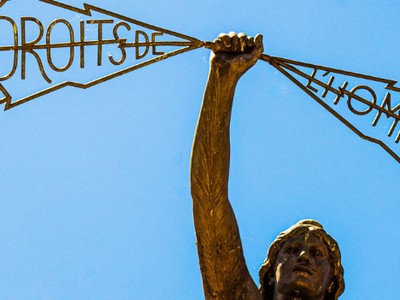
Rebalance project seeks to provide new insights, resources, events, and learning materials to help foster a rebalancing of capitalism and democracy. Democracy is under threat from capitalism. Companies are undermining democratic processes both at home and abroad. Among other things, they engage in excessive lobbying, violations of basic human rights, and collusion with repressive governments. But businesses and their leaders can also help promote democracy. Indeed, companies can have a positive influence on authoritarian governments, they can protect minorities, or even produce democracy-enhancing products and services. Big and small companies can therefore play a significant part in enabling democratic participation and restoring the rights of citizens.
Project website / EU Cordis database
Researcher: Francesco Zirpoli
Duration: 01/10/2022 - 30/09/2025
Funding: Horizon Europe - Culture, creativity and inclusive society
ISEED - Inclusive Science and European Democracies
ISEED - Inclusive Science and European Democracies is an international research project funded by the European Union’s Horizon 2020 Research and Innovation Programme (2021-2024). ISEED responds to the EU's call for supporting inclusive, innovative and reflective societies in Europe, specifically by "Developing deliberative and participatory democracies through experimentation". ISEED, coordinated by Ca’ Foscari University of Venice, joins researchers from Italy, France, Poland, Norway, Denmark, Ireland, Spain, Bulgaria, Uruguay and the United Kingdom for the 3 years to learn lessons from citizen science engagement projects in order to understand how to involve citizens in democratic deliberation.
Project website / EU Cordis database
Researcher: Eleonora Montuschi
Duration: 01/02/2021 - 31/01/2024
Funding: Horizon 2020 Societal Challenges - Europe In A Changing World - Inclusive, Innovative And Reflective Societies