

Research
International and interdisciplinary research activity of ECLT is organized in Research Units which currently includes:
- Artificial Intelligence
- Bioinspired Design
- Science of Complexity
- Arts and Complexity
- Neuroscience
- Living Technology
- Artificial Life
- Solutions
Work with us
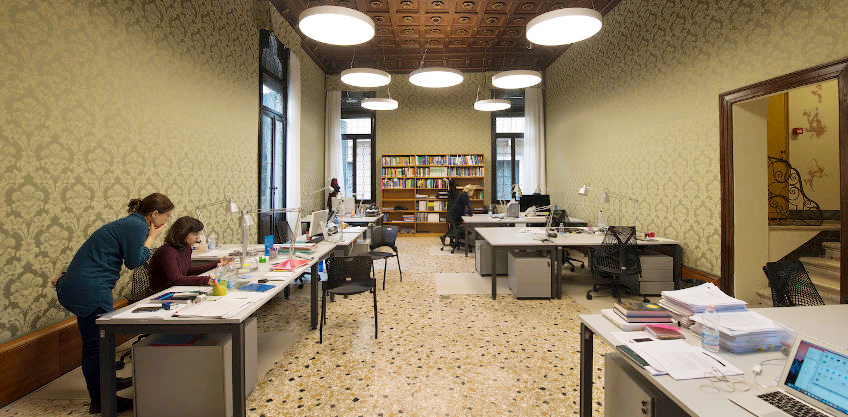
ECLT offers a large variety of opportunities for research activities through calls for fellowship applications and grants. Please visit this section to stay up-to-date on open calls.
Research units
Artificial intelligence

Our goal is to study and develop computer algorithms that exhibit human-like cognitive abilities.
Our research focuses on the following areas:
- Machine learning
- Computer vision
- Pattern recognition
- Socio-ethical implications of AI
Bioinspired design

Our goal is to study the complexity of living systems using a holist approach bridging the borders between Physics, Chemistry, Biology and Medicine. To this aim, we combine computational and experimental tools to find molecular level solutions to a broad range of issues related to medicine, biotechnology, environment and energy.
Arts and complexity

For a long time, art and science were viewed as distant domains that were only loosely connected, but we’re now witnessing more interaction between the two. This has led to an increased awareness of how art and science are indeed two different but strongly coupled aspects of human creativity, both driving innovation as art influences science and technology, and as science and technology in turn inspire art. This Research Unit will start from these premises to face research challenges at the intersection of art, science, and technology.
Science of complexity
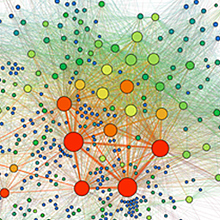
Any system in which a large number of elements interact, adapt and evolve to give rise to new meso- and macro-level structures can be described as complex. Learning about the organization and the dynamic of such systems raise challenging problems with respect to data - how to collect them, how to interpret them, how to use them to build models that can help to predict system dynamics. The RU is devoted to design new methodologies for understanding the fundamental principles of complex systems at a variety of scales, from molecular biology to human societies. Research fields: Adaptive Experimental Design and Clinical Trials, Evolutionary approaches for Multi-Objective Optimization, Intelligent Systems for Data Analysis, Machine Learning, Bayesian Network and Graphs Analysis , Predictive High Dimensional Models, Computational medicine, Econometrics.
Neuroscience
The mission of this research unit is to promote the study of the human mind and its social and cultural complexities across major disciplines including neuropsychology, comparative cognitive neuroscience, affective neuroscience and computer science work towards an integrative view of sensory modalities and research methodologies.
Living technology
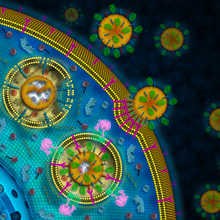
The main focus of LT research unit is to develop and explore living technologies, which are technologies that are characterized by robustness, autonomy, energy efficiency, sustainability, intelligence, learning, self-repair, adaptation, self-replication and evolution, all properties most current technologies lack, but living systems possess.
Artificial life

The goal of this research unit is to study and synthesize living and life-like processes, both life-as-we-know-it and life-as-it-could-be regardless of substrate. Substrates can be wet carbon-based chemistry (wet Alife), software-based (soft Alife), robotics-based (hard Alife), or mixtures of these.
Note that living and life-like processes can exist at multiple levels and thus include for example ecological systems and human organizations.
Solutions

The aim is to study and develop solutions to a variety of complex societal challenges caused by the interactions between technological advancements (‘physical technologies’) on one hand and cultural structures and institutions (‘social technologies’) on the other hand. Such challenges include the erosion of the collective perception of objective facts, increasing inequality, climate change, and loss of biodiversity. There is a sense of urgency to understand the root causes of these disturbing trends and to offer feasible alternative visions of cultural and technological change that can take us in a better direction.
Research projects
StEPPFoS - Strengthening Evidence-Based Policy Practice for Sustainable Food Systems under the EU-AU Partnership
Project Title: StEPPFoS - Strengthening Evidence-Based Policy Practice for Sustainable Food Systems under the EU-AU Partnership
Start Date-End Date: 01/01/2024 - 31/12/2027
Project duration: 48 months
ECLT project leader: Amsalu Woldie Yalew
Coordinator: Forum for Agricultural Research in Africa (FARA), Ghana
Funding Scheme: Call HORIZON-CL6-2023-FARM2FORK-01
Abstract
Food and nutrition security and sustainable agriculture (FNSSA) are among the critical development concerns in Africa. FNSSA is among the policy priorities in many African countries and at the center of the AU/EU international development agenda. FNSSA was the priority R&I area in the AU-EU High Level Policy Dialogue on Science, Technology, and Innovation. This was further substantiated by the establishment of the Pan-African Network for Economic Analysis of Policies (PANAP). StEPPFoS thus, aims contribute to theFNSSA 10-year road map and the global transition towards sustainable food systems through the implementation of activities that link PANAP to the FNSSA partnership. Specific objectives are to improved capacities of stakeholders, to enhanced science-policy interface, to improve strategies that promote scientific support within policy development, to expand and strengthen the PANAP Network. StEPPFoS will be implemented through its 8 work-packages over a period of 48 months. Capacity building,stakeholder engagements, participatory monitoring, evaluation, and learning are the main methods to be used to deliver StEPPFoS objectives whiles adhering to open science principles and effective data management practices. The consortium is well positioned to deliver these objectives as it draws on the expertise and experiences of its partners drawn from both Europe and Africa credible academic, research, and policy institutions.
LEAP unLocking carEer potentiAl with comPlex systems, data analytics and machine learning
Project Title: LEAP: unLocking carEer potentiAl with comPlex systems,data analytics and machine learning
ECLT project leader: Prof. Guido Caldarelli
Coordinator: Aristotle University of Thessaloniki
Funding Scheme: Erasmus+ KA220-HED - Cooperation partnerships in higher education
Abstract
LEAP aims to equip learners with in-demand ICT skills, bridging the gap between industry and academia by offering a flexible and inclusive learning approach. The project aims to develop and offer learning content that is efficient, inclusive and pertinent to the current state of the ICT labour market. The curriculum focuses on complex systems, statistics, data analytics and machine learning, with an experiential pedagogical approach that fosters transferable and forward-looking skills.
LEAP aims at bridging the gap between industry and academia by offering flexible and inclusive outcomes-oriented and student-oriented learning, integrating Complex Systems, Data Analytics, Statistics, and Machine Learning. The planned activities follow the ADDIE model, including needs analysis, pedagogy research, course design, and evaluation. Dissemination activities enhance project impact.
REXlearn
Past projects
 | ECLT past projects | 905 K |