
Research
Research groups


Adaptation between Language and Corporeality
The research group aims to study the interactions between language and corporeality in the expression of poetic language, writing, and theatre, from the ancient world to the contemporary. The theoretical perspective, structurally interdisciplinary, within which the phenomenon is studied draws on semiology, semiotics, psychoanalysis, and interpretive anthropology.
Coordinator: Massimo Stella
Members: Giulia Delogu, Cristina Fossaluzza, Simone Francescato, Alessandro Mistrorigo, Filomena Mitrano
Intra- and Intermedial Adaptations of European and American Literary Texts and Models in the 19th and 20th Centuries
The research group will focus on studying the multiple forms of intra- and intermedial adaptation of nineteenth- and twentieth-century European and North American literary texts and models, examining cases of explicit or implicit intertextuality (in the form of rewritings, parodies, translations, quotations, allusions, etc.) and of cinematic or narrative-visual transposition (graphic novel). The group will organise, individually and/or collectively, seminars, conferences, and study days involving Italian and international colleagues, with the aim of strengthening collaborations in view of possible publications on the topic.
Coordinator: Simone Francescato
Members: Massimo Ciaravolo, Alessandro Farsetti, Ashley Merrill Riggs, Stefania Sbarra, Emma Sdegno, Julien Zanetta
PhD student: Felicita Gelmini
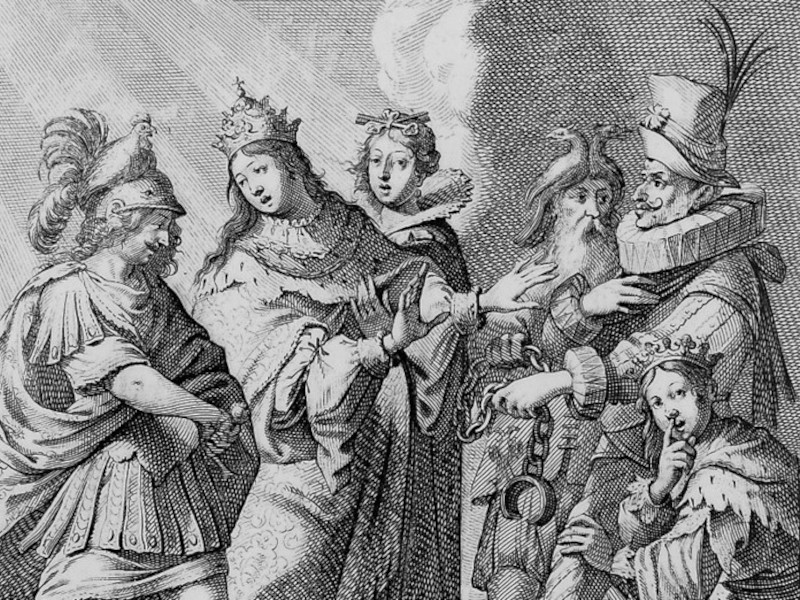
Adaptations, Circulations, Innovations: European Drama in the Early Modern Period
The aim of the project is to investigate the multiple strands of the early modern European dramatic tradition in all their variety, difference, and complexity. In doing so, it is important to subject the conventions of thematic adaptations and the aesthetic norms that determine them to comparative study. The uniqueness, originality, and innovative force of many dramatic works are not fully appreciated when adaptations of the Commedia dell'arte, Shakespeare, and the great Spanish and French playwrights are cited as an exclusive aesthetic reference point. Equally inadequate, in our view, is evaluating the dramatic productions of the early modern period against the Aristotelian standards inherited from antiquity and established during the classicist period. Many authors, particularly in Latin and German dramaturgy, did not regard the genre standards of antiquity as exemplary at all, and therefore proceeded freely and in a 'hybrid' manner in the writing of their plays. Of great interest, therefore, is the emergence of hybrid dramatic forms. The key questions concern when and where they arose, through which adaptations of ancient and contemporary European genre models and character types, and against which norms they should be evaluated in their respective historical contexts. Also to be examined are the protean characters appearing across various types of drama, the mixing of secular and sacred forms, materials, and motifs, and the persistence or transformation of rhetorical models, topoi, genre norms, plots, and character constellations.
Coordinator: Claus Kurt Zittel
Members: Magda Campanini, Cristina Fossaluzza, Maria Del Valle Ojeda Calvo, Adrian J. Sáez Garcia, Massimo Stella

Intra- and interlinguistic, intercultural, and intermodal adaptation from synchronic and diachronic perspectives, and the training of adapters, translators, and language mediators
Building on my HITRADE [FRA] research project, which compiles Jean Delisle’s archive on the history of translation, Professor Emeritus at the University of Ottawa, and presents material on the history of translation and the role of language mediators, this interdisciplinary research group aims to study intra- and interlinguistic, intercultural, and cross-modal adaptation from both synchronic and diachronic perspectives, following a series of analytical strands:
- the training of linguistic and cultural adapters—such as language mediators, translators, interpreters, audiovisual translators, transcreators, and dialogue writers—who use different languages, including those expressed through various modes of communication (acoustic-vocal, visual-manual, tactile)
- collaboration among the various cultural agents responsible for adaptation activities, with particular attention to the challenges and advantages posed by technological tools and artificial intelligence
- the role of language mediators as cross-cultural agents during periods of cultural and/or technological transition
- the history of linguistic and cultural adaptation: drawing on the experience of the HITRADE translation history archive, we aim to create a new website to collect memories, testimonies, and stories of adaptations from a diachronic, cross-disciplinary perspective.
We have entered into an agreement with the Department of Languages, Literatures, Cultures, and Mediation [ITA] (University of Milan) for research on the history of translation.
Coordinator: Mirella Agorni
Members: Giuseppe De Bonis, Maria Elisa Fina, Marie Christine Jamet, Lara Mantovan, Linda Rossato, Graziano Serragiotto, Giuseppe Sofo, Giuseppe Trovato, Federico Zanettin
PhD students: Giulia Cavalli, Viviana Mauro, Pietro Rigo
Adapting Learning Environments to the Challenges of Language Education and Language Teacher Training
This research group focuses on:
- adapting teaching methods to promote pluralistic and integrated approaches, multiliteracies models, and inclusion models for students of various age groups (from children to adults), in line with the current challenges of multilingual and multicultural language education (L2, LS, minority languages, classical languages, etc.);
- adapting training programs for teacher professional development (initial and in-service) to address the need to promote linguistic, cultural, and intercultural, methodological, organizational, digital, and socio-emotional knowledge and skills, etc., in line with the themes of the 2030 Agenda to improve the quality of education and the well-being of individuals;
- adaptation of research methods and processes to address pedagogical, linguistic, and intercultural challenges (immigration, multilingualism, special educational needs, technological advancement, etc.).
Coordinator: Graziano Serragiotto
Members: Monica Banzato, Shaul Bassi, Fabio Caon, Maria Elisa Fina, Yannick Hamon, Marie Christine Jamet, Marcella Menegale, Maria Cecilia Luise, Giuseppe Trovato
PhD students: Giorgia Fattori, Tiziana Lorenzet, Silvia Scolaro, Federico Trentanove
Adaptation of Classics for Children / Rewritings of Myths
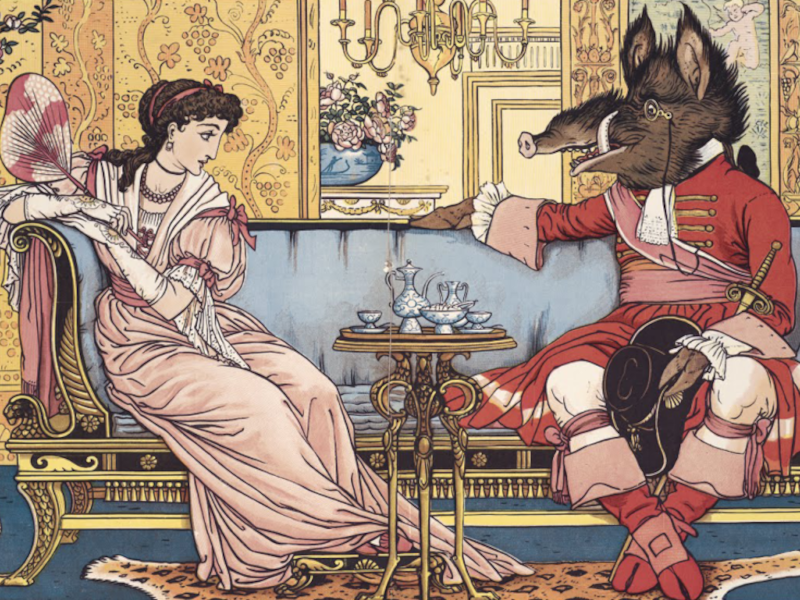
This research group is organized into two thematically intertwined subgroups, each with its own specific focus. The first subgroup will analyze literary, artistic, and musical adaptations of classics from both the adult and children's canons of European and American literature. This research particularly focuses on contemporary Children's and Young Adult (YA) production, drawing on the perspectives of Adaptation Studies—including from a language-teaching standpoint. The second subgroup will focus on the rewriting and adaptation of fairy tales, novellas, and mythic narratives within the European tradition, exploring how these genres interact from an interdisciplinary perspective, from the Renaissance to the present day.
The group collaborates with the Fondazione Tancredi di Barolo [ITA] (Turin) and Università Suor Orsola Benincasa [ITA] (Naples).
Coordinator: Laura Tosi
Members: Magda Campanini, Margherita Cannavacciuolo, Fabio Caon, Ashley Merrill Riggs, Adrian J. Sáez Garcia, Massimo Stella, Alessandro Cabiati
PhD student: Carolina Celeste Granini
Adaptation of inguistic Structures to the Context of Utterance: the FEEL Project (Formal Explanations of Emotional Language)
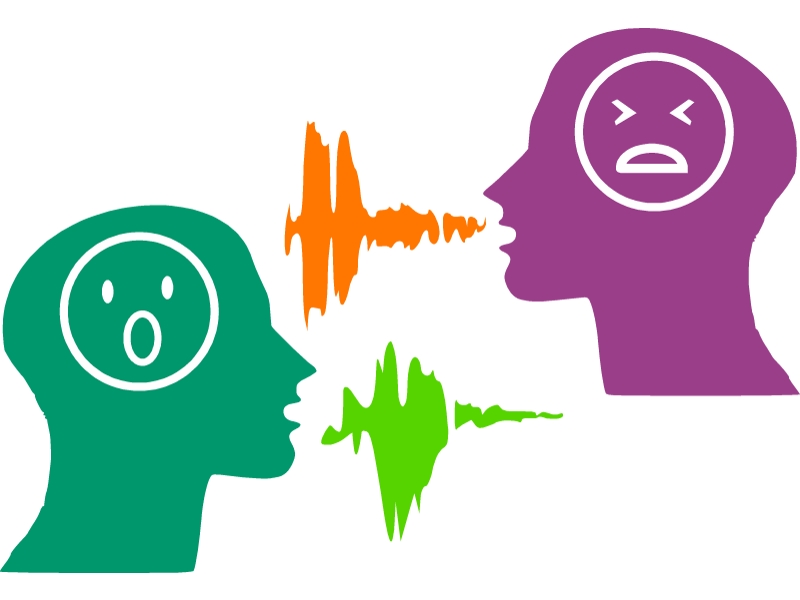
The linguistic structures used by speakers to express emotions - such as surprise, disapproval, alarm (so-called "warnings"), and regret - display peculiar characteristics, including a cross-linguistic perspective, which distinguish them from very similar structures used in non-emotional contexts. These peculiar characteristics are primarily intonational and gestural (co-speech gestures).
This project aims to study the interaction between the various components of emotional sentence structures - the syntactic, prosodic, and gestural components - and context, from both a synchronic and cross-cultural, as well as a diachronic, perspective. In particular, the following topics will be addressed:
- syntactic, prosodic, and gestural analysis of sentences and fragments - that is, elliptical or non-sentential structures - in Italian and Italian dialects, compared with the realisation of the same structures in "culturally distant" languages such as Armenian, Korean, and Vietnamese.
- analysis of Old Italian and ancient Germanic languages with regard to the introduction of punctuation, in order to identify correlations between the presence of punctuation marks and the informational context - such as the given/new alternation - and emotional expression, for example emphasis on a constituent.
Coordinator: Alessandra Giorgi
Members: Marina Buzzoni, Federica Cognola, Chiara De Bastiani, Roland Hinterholz, Nicola Munaro
GLIBE – Global Ibero-Romance Languages Adaptation and Adaptability of Ibero-Romance Languages as "Global Languages" (GLIBE)
The group focuses on the study of Ibero-Romance languages (Spanish and Portuguese) as "global languages" historically and in the present day. In particular, it will analyse the phenomena of linguistic and stylistic transformation (adaptation) that are leading to a reconfiguration in grammatical, discursive, and pragmatic terms of the Spanish and Portuguese languages. It will also study the capacity of these languages to adapt to the challenges of the sociological and geopolitical changes of the contemporary world: migration phenomena, digital texts and genres, social media, fields of translation and linguistic and cultural mediation, new technologies applied to metalinguistic study and to learning and teaching as foreign languages, and the creation and use of dictionaries and corpora.
Coordinator: Florencio Del Barrio De La Rosa
Members: Vanessa Castagna, Elena Dal Maso, Laura Nadal Sanchis, Maria Eugenia Sainz Gonzalez, Giuseppe Trovato
PhD students: Antonella Bove, Emanuela Masi
Intra- and Interlinguistic, Intercultural and Intermodal Adaptation in Tourism and Cultural Heritage Communication from an Accessible Perspective
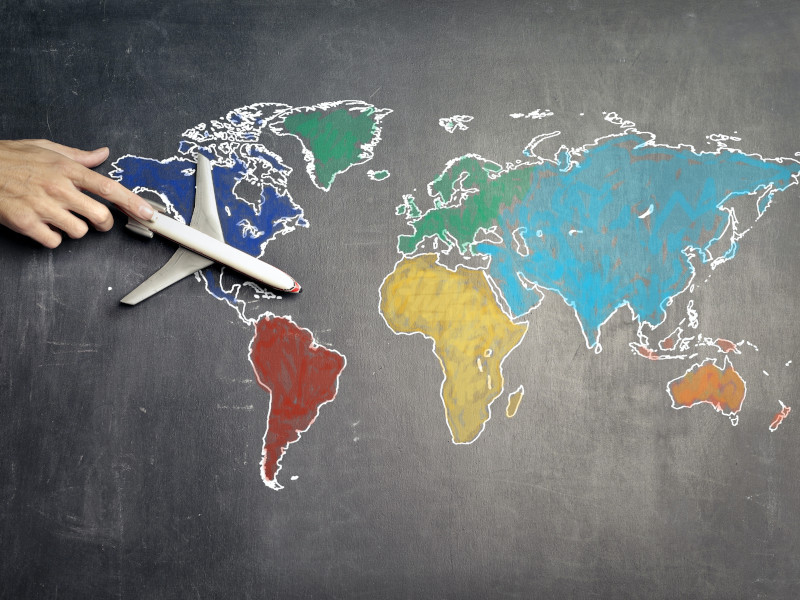
Research on tourism has involved our Department in various projects, including the PRIN Dietaly and the PNRR INest. This cross-disciplinary research group aims to study the complexity of the modes of intra- and interlinguistic, intercultural, intermodal (cross-medium adaptation), and semiotic adaptation in tourism communication broadly understood, along the following lines of research:
- the adaptation of national, regional, or local cultural heritage (cultural memory and heritage) through creative forms of adaptation such as storytelling and destination brand communication, across various intra- and interlinguistic applications.
- adaptation in cultural exhibition settings (museums, exhibitions, monuments, architectural structures) that is mindful of the specific needs of visitors.
- the adaptation of language and communication applied to cultural heritage in order to promote accessibility and inclusion, through simplification strategies and adaptation for people with limited competence, and with the aid of new technologies and intermodal strategies, including between languages conveyed through different modalities (Italian, Italian Sign Language, tactile Italian Sign Language).
The group collaborates with the Department of Humanities at the University of Ferrara [ITA].
Coordinator: Mirella Agorni
Members: Chiara Branchini, Anna Cardinaletti, Daniela Cesiri, Giuseppe De Bonis, Maria Elisa Fina, Simone Francescato, Lara Mantovan, Ashley Merrill Riggs, Linda Rossato, Francesca Santulli, Graziano Serragiotto, Francesca Volpato
PhD students: Giulia Cavalli, Viviana Mauro

Adaptation in Bilingualism/Multilingualism
The condition of bilingualism/multilingualism is a form of adaptation of a speaker's linguistic and cultural competence to different and co-present linguistic systems within a community. Various contexts of language contact will be examined (between standard and non-standard varieties, between minority or heritage languages and majority languages, between standard language and regional and local varieties, etc.), considering both languages acquired as native languages and those acquired subsequently, particularly in the Balkan, Germanic, Romance, and Slavic areas. The research will focus on the following topics:
- synchronic and diachronic varieties as an effect of adaptation in various language contact contexts, in order to study the internal mechanisms of linguistic development, the processes of maintenance or innovation of the grammatical system, and the processes of grammaticalisation.
- phenomena of contact and adaptation from dialect to standard language and from standard language to dialect in bidialectal speakers; adaptation of tools for measuring linguistic dominance in bilingual speakers to bidialectal contexts; adaptation of writing forms in languages that have no written standard.
- cultural phenomena and adaptation in situations of bilingualism/multilingualism, multilingual novels, and comparative studies.
- unimodal and bimodal bilingualism and phenomena of code switching, code mixing, and code blending. Evidence of simultaneous bilingual activation in comprehension and production tasks.
- phenomena of linguistic and stylistic transformation and reconfiguration in grammatical, discursive, and pragmatic terms of "global languages" (with particular focus on Spanish and Portuguese).
Coordinator: Anna Cardinaletti
Members: Marija Bradaš, Chiara Branchini, Laura Brugè, Vanessa Castagna, Elena Dal Maso, Florencio Del Barrio De La Rosa, Pavel Duryagin, Giuliana Giusti, Iliana Krapova, Gianluca Lebani, Lara Mantovan, Alessandro Mistrorigo, Laura Nadal Sanchis, Patrizio Rigobon, Maria Eugenia Sainz Gonzalez, Francesca Santulli, Alessandro Scarsella, Giuseppe Trovato, Giuseppina Turano, Francesca Volpato
PhD students: Maria Grazia Marrocu, Maria Andrea Carboni, Silla Paneghel, Pietro Rigo, Eleonora Digiorgio
Displacement/Adaptation/Transformation
This research group understands the key concept of the Project of Excellence—adaptation/adaptability—within transformation as a major paradigm of our era: the transformation of concepts, forms, and discourses. The research focuses on geographical displacement as a moment of conceptual transformation, with reference to the circulation of ideas between Europe and the Americas, while also opening up to a global horizon. From within their respective fields, each member studies how European thought, literature, and criticism adapt to new contexts and reinvent themselves along different routes, without overlooking the (highly topical) concern for the intimate link between destruction and form. The potential of adaptation is addressed in the specific case of European philosophies (Italian Theory), schools of literary criticism (narratology), aesthetic forms, and literary and artistic genres (myth, epic, fairy tale, theater, the novel, the Western), with particular attention to the question of coexisting multiple temporalities, the body, and the figure of the reader.
Coordinator: Filomena Mitrano
Members: Pia Masiero, Margherita Cannavacciuolo, Giulia Delogu, Massimo Stella, Cristina Fossaluzza, Alessandro Mistrorigo, Elisa Bordin
PhD student: Francesco Tortato
Literary Study of Comics Phenomena of Transposition of Literary Texts into the Language of Comics and the Graphic Novel
A thorough review of the transposition of the literary canon into the language of comics and graphic novels still requires such onerous preliminary precautions that they undermine, at least at first glance, the undeniable appeal of the literature-comics relationship, both theoretically and historiographically. Despite the undeniable success of new media, the issue is burdened by a strong academic prejudice. This prejudice is justified insofar as the transformations of language, occurring at an ever-increasing speed, are difficult to classify, if only because of their complexity, which cannot be reduced to the usual objects of the linguistic-philological method. These objects are identified, with rare exceptions, with text-writing, within the confines of a framework that does not require the recognition of techniques of material production other than writing, or of the organization of the text-image relationship distinct from traditional rhetoric. Therefore, the aforementioned prejudice manifests a syndrome of superiority that denounces the unreasonableness of the appropriation of the history of comics and graphic novels by philological sciences and literary criticism. This appropriation can be granted on a provisional basis until a new balance of power emerges through the desire for cooperation between heterogeneous expertise. This is the aim. Over the course of the two-year period, additional and differentiated approaches to comics-related collecting have been added (in relation to the donation of Professor Alessandro Costantini's collection of books and related periodicals to the Department's Experimental Laboratories - Bembolab), promoting awareness through cataloging. One research direction has emerged at the 2025-2026 international Italian-French conference, Chambéry-Venice: Fumetto & Bande Dessinée, with a focus on the transpositions of literary and non-literary texts into the language of European comics.
Finally, in 2025, Professor Veronica Orazi joined the general project with the platform Cómic Salud Bienestar Cómic y Objetivo de Desarrollo Sostenible 3: Salud y Bienestar, aimed at documenting and interpreting the linguistic intersections between comics and science.
Coordinator: Alessandro Scarsella
Members: Fabio Caon, Tiziana D'Amico, Alice Favaro, Marco Fazzini, Veronica Orazi, Francesca Santulli, Giuseppe Sofo, Federico Zanettin
PhD students: Caterina Dacci, Benedetta D'Incau

Food Studies
The “Food Studies” research group aims to study the communicative dynamics and the historical, cultural, and literary implications surrounding the overarching theme of food and nutrition. The approaches used to explore this topic reflect the research interests and areas of expertise of the group’s members, such as the historical study of the role of food in identity formation across various cultures and in migration processes, the analysis of narratives of food and nutrition across various literary genres, and linguistic and translation studies – including from a multimodal and audiovisual perspective – of communicative dynamics across various genres and contexts. The linguistic and cultural areas investigated – which also consider contrastive perspectives – are diverse and include, but are not limited to, the English-speaking, Spanish-speaking, Portuguese-speaking, and Italian-speaking worlds.
Coordinator: Daniela Cesiri
Members: Francesca Coccetta, Ashley Merrill Riggs, Linda Rossato, Laura Tosi, Giuseppe Trovato
Gender and Identity. Linguistic Adaptation in Languages and Cultures
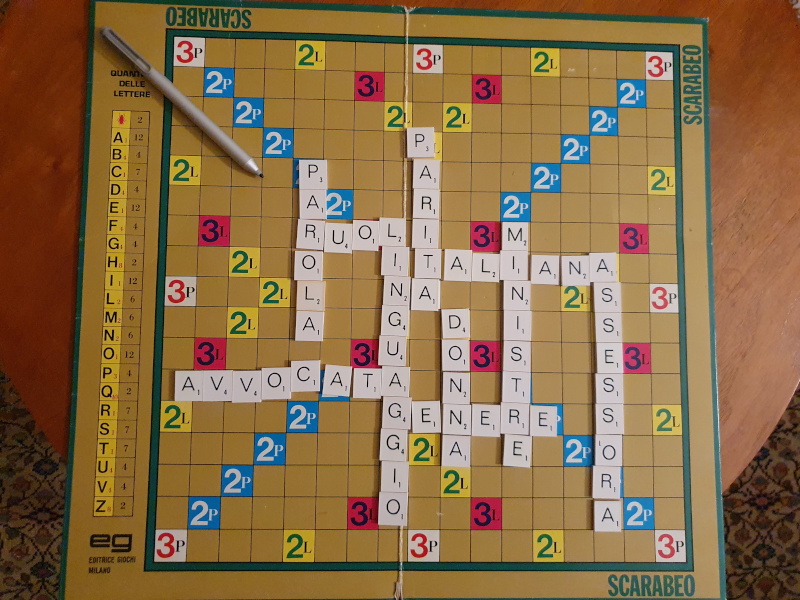
Language is the most effective and pervasive tool for thinking and sharing identity. Gender, in turn, is one of the fundamental dimensions in the codification of social roles. In contemporary societies, the fact that gender equality has not yet been achieved, on the one hand, and the emergence of new identities beyond the female-male dichotomy, on the other, create communicative needs that are expressed through different linguistic forms depending on the systemic structure of languages (with or without gender morphology on nouns, pronouns, etc.) and on political and socio-cultural diversity.
The research will focus on the following themes:
- comparative analysis of adaptations to gender representations in languages with nominal morphological gender (such as Romance languages), pronominal gender only (such as English), and no gender (such as LIS, Finnish, or Turkish).
- translatability of inclusive language between morphologically related languages with culturally different linguistic uses and between morphologically divergent languages.
- gender in machine translation and artificial intelligence.
- experimental methods for studying use and comprehension of inclusive gender neomorphs.
Coordinator: Giuliana Giusti
Members: Chiara Branchini, Laura Brugè, Anna Cardinaletti, Rosa Caroli, Vanessa Castagna, Gianluca Lebani, Lara Mantovan, Laura Nadal Sanchis, Maria Eugenia Sainz Gonzalez, Giuseppe Sofo
PhD students: Federica Marenghi, Antonella Bove
Ideas, Languages, Politics. Metamorphoses in Space and Time
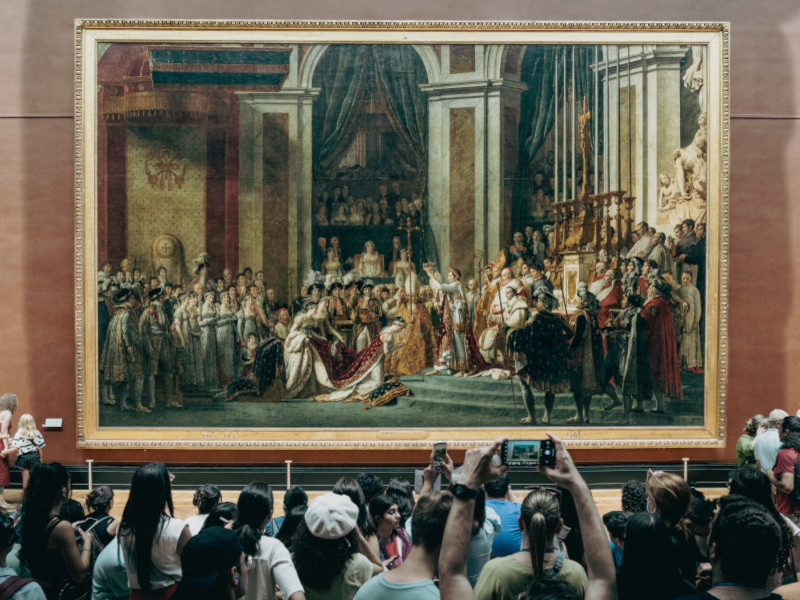
The group brings together scholars from the fields of history, literature, and linguistics, united by a shared interest in the analysis of ideas, words, concepts, forms of communication, and political languages, studied through their processes of change, metamorphosis, and adaptation across different spatial and temporal contexts. Research focuses on the modern and contemporary periods, with particular attention to Europe, the Americas, and East Asia. The objects of study include: the processes through which data and information are transformed into operational ideas and political languages; the metamorphosis of political ideas in their transition across different discursive and temporal contexts; the circulation of ideas and the ways in which they impact society, especially in urban spaces; the adaptation of languages in their passage across genres and media, conceived and constructed to respond to the needs of different audiences; the multidirectional migrations of ideas and languages among different forms of knowledge and the reciprocal influences between history, literature, and politics; the creation of new languages corresponding to new ideas through the semantic evolution of words and key concepts and through the creation of neologisms; and the intrinsic historicity of the words of politics, together with the weight of historical context in the construction and consolidation of the meanings of terms used in political debate.
Coordinator: Giulia Delogu
Members: Francesca Antonini, Duccio Basosi, Elisa Bordin, Rosa Caroli, Evgeny Dobrenko, Alessandro Farsetti, Cristina Fossaluzza, Gianluca Lebani, Michele Mioni, Mônica Muniz De Souza Simas, Rolf Petri, Stefano Petrungaro, Giuseppe Sofo, Massimo Stella, Antonio Trampus

Literary and Cultural Adaptation in the Seventeenth and Eighteenth Centuries
Our group investigates adaptation as a central cultural logic of the long eighteenth century. We study rewriting, translation, imitation, remediation, appropriation, and transnational exchange not as secondary practices, but as primary modes of creativity, circulation, and critique. From rewritings of Don Quixote or Shakespeare, to the innovative novel forms of Richardson, Sterne, and Diderot, the adaptive forces of salons, clubs, Bluestocking groups; from biblical rewritings to scientific fiction, periodicals, dictionaries, theatre, visual culture, and material objects, we explore how inherited forms were transformed for new audiences, media, markets, and socio-historical pressures. Our mission is to rethink originality, authorship, fidelity, and reception by showing how Enlightenment culture continually remade itself through adaptive practices. Across languages, disciplines, and national traditions, we define adaptation as a force shaping knowledge, taste, ideology, and cultural memory.
Coordinator: Flavio Gregori
Members: Magda Campanini, Cristina Fossaluzza, Massimo Stella
PhD students: Emma Quiriconi, Alice Tartari, Erica Vianello
Italian Minority Languages as a Laboratory for the Study of Linguistic Adaptation Strategies in Synchronic and Diachronic Perspective
This group intends to study linguistic adaptation strategies in the context of minority languages spoken in Italy, Balkan, and Slavic territories. In particular, the research will focus on Germanic languages spoken in Italy (Mòcheno, Cimbrian, Sappadino, Timavese, Walser), Arbëresh, Ladin varieties, and languages found in contact situations within the Balkan and Slavic areas. These varieties will be studied from a synchronic perspective through the collection and analysis of new linguistic data, and systematically compared with their languages of origin (also from a diachronic perspective and within their contact situations), in order to identify the dynamics of linguistic influence and interference. Finally, the tools and methods offered by the digital paradigm will be employed for the conservation and dissemination of the collected data and research results in order to preserve and promote linguistic and cultural heritage.
Coordinator: Federica Cognola
Members: Marina Buzzoni, Chiara De Bastiani, Alessandra Giorgi, Roland Hinterholzl, Iliana Krapova, Nicola Munaro, Luisa Ruvoletto, Giuseppina Turano

Literatures, Adaptation, Anthropocene
The research group will focus on the connections between adaptation as a literary device and adaptation as a cultural, political, and social strategy that the human community is called upon to imagine in an era of environmental crisis. Combining diverse linguistic and literary competences, the group will address this broad question in comparative form, considering both the adaptation of humans to the environment and that of the environment to the human presence. Contemporary Scandinavian literatures (Danish, Faroese, Icelandic, Norwegian, Swedish, Sámi), American, English and postcolonial, and Spanish literatures will be examined. The adaptation of literary texts and genres across centuries and geographical areas in response to climate change will be analysed, examining the classics (Shakespeare, Stevenson, etc.), long-standing literary traditions that are taking on new ecological connotations today (utopian/dystopian fiction), and more recent subgenres (climate fiction, disaster fiction, solarpunk). The corpus examined will include fiction, children's/Young Adult fiction, poetry, theatre, and cinema, and perspectives including ecocritical and postcolonial approaches will be combined. Among the themes considered will be the relationship between adaptation and memory - how the re-memory of certain national traumas contributes to an ethical adjustment of the sense of national belonging, or how the memory of other traumas can serve to prepare for environmental traumas.
Coordinator: Shaul Bassi
Members: Elisa Bordin, Sara Culeddu, Lucio De Capitani, Marco Fazzini, Pia Masiero, Laura Tosi
Educational and Linguistic Pathways for People with Language and Learning Difficulties
The research focuses on adapting language to the cognitive, communicative, and linguistic characteristics of the individual, and addresses the following topics:
- adaptation of linguistic tools for educational assessment and the analysis of language competence in children and adolescents with language difficulties, language disorders, learning disorders, deafness, and special educational needs;
- adaptation of multimodal and multimedia tools and methods for language intervention aimed at the inclusion of people with language difficulties;
- study and research on the use of Italian Sign Language (LIS) in all cases of communicative disabilities that prevent the use of verbal communication, both in children and adults.
Coordinator: Francesca Volpato
Members: Monica Banzato, Chiara Branchini, Fabio Caon, Anna Cardinaletti, Elena Fornasiero, Maria Cecilia Luise, Lara Mantovan, Marcella Menegale, Graziano Serragiotto

Studies on Translation, Rewriting, and Adaptation in the Digital Age (STRADE)
The research group “Studies on Translation, Rewriting and Adaptation in the Digital Age” (STRADE) is composed of researchers from various fields within linguistics, translation and literary studies, and aims to focus on the study of translation in the contemporary era in both a linguistic and metaphorical sense, whilst also embracing the Digital Humanities, the study of the interaction between translation and digital technologies, and more “undisciplined” forms of research, including arts-based research and action research. The concept of translation is therefore broad: in addition to the transposition of texts from one language to another and the rewriting and adaptation of literary texts, the group will also undertake studies on migration and post-migration literature as a form of intercultural translation and adaptation, and on the translation of the self as a form of adaptation that is not only linguistic but also human. The group will also address journalistic translation and multimodality, linguistic and/or intercultural mediation, and studies on the evolution of literary and translation practices in the digital age, with a particular focus on collaborative practices and forms of translation, rewriting and adaptation that promote greater linguistic, social and cultural inclusivity. Particular attention will be paid to the educational implications of the group’s research and to the collaborative practices typical of the digital age.
Coordinator: Giuseppe Sofo
Members: Marija Bradaš, Magda Campanini, Vanessa Castagna, Massimo Ciaravolo, Sara Culeddu, Maria Elisa Fina, Yannick Hamon, Marco Infurna, Ashley Merrill Riggs, Giuseppe Trovato, Federico Zanettin
PhD students: Michela Lagnena, Erica Vianello
PhD
Fellowships awarded for 2026 (42nd cycle)
Alice Fontana, research area: the adaptation of Italian museum language from an accessibility perspective: a corpus-based, psycholinguistic, and computational approach
The project proposes a diachronic and cross-generic analysis of prose adaptations of Edmund Spenser's The Faerie Queene, from the eighteenth century to the postmodern present, with a specific focus on the Victorian and early twentieth-century periods. Although it is one of the foundational texts of the English early modern period, Spenser's poem has so far received little scholarly attention in terms of its reception in the form of adaptation. The project therefore aims to fill this significant gap by investigating how and why The Faerie Queene has been rewritten in narrative form for different audiences and historical-cultural contexts. The research is structured around two main objectives: on the one hand, to analyse which elements of the poem are reproduced, omitted or transformed in the adaptations, and through which formal strategies; on the other, to determine whether the decline in adaptations and the change in their audience over the course of the twentieth century can be attributed to a transformation in the cultural value of the poem and its modes of transmission. To achieve these objectives, the project will draw on existing theories of adaptation and transtextuality, as well as studies on the adaptation of canonical texts for children and young people, applied to a corpus of adaptations that has so far received little critical attention. The research will make it possible to identify the different cultural, pedagogical, aesthetic and metaliterary functions assumed by the adaptations in the contexts under consideration. In particular, the analysis will clarify how The Faerie Queene is made accessible to different audiences, how the relationship between hypotext and hypertext evolves, and how the rewritings confirm or renegotiate the cultural and moral authority of Spenser's poem.
Lucia Tacchetti, research area: the adaptation of Italian museum language from an accessibility perspective: a corpus-based, psycholinguistic, and computational approach
The research project aims to investigate the linguistic adaptation and simplification of Italian museum texts from the perspective of communicative accessibility, an area which, unlike institutional and administrative language, still lacks a systematic approach based on experimental evidence. In its first phase, the project involves the construction of a corpus of museum exhibition texts, which will be analysed using automatic and manual annotation tools to identify recurring lexical, syntactic and textual features of Italian museum language as a specialised variety. The features thus identified will make it possible to determine the variables to be manipulated in the experimental phase, conducted using eye-tracking methodology on three groups of speakers (native speakers with university education, native speakers with education no higher than a secondary school diploma, and L2 speakers of Italian), with the aim of verifying the impact of specific linguistic features on reading and comprehension processes. The features found to be significant will then be used as criteria to produce a manual simplification calibrated on the experimental data, to be compared with a simplification produced using a Large Language Model, in order to assess the potential and limitations of artificial intelligence in linguistic adaptation within the cultural sphere. The project thus aims to fill a gap in research in the field by offering a novel description of Italian museum language, an innovative methodological contribution through the use of eye-tracking, and a more robust benchmark for evaluating automatic simplification systems, with concrete practical implications for the development of accessible and inclusive museum communication strategies.
Fellowships awarded for 2025 (41st cycle)
Simone Mazzoli, research area: metaphor as linguistic adaptation: a comparative analysis of humans and language models
The research project investigates metaphor as a phenomenon of linguistic adaptation, namely as a process of semantic transformation of a word in the transition from literal to figurative use. The aim is to formalise a model of metaphor interpretation as conceptual combination, consisting of a component representing the semantics of the elements involved (topic and vehicle) and a component describing their mechanisms of combination in the construction of the emerging metaphorical meaning. The model will be validated through a study divided into two phases: in the first, a corpus of metaphors in Italian will be constructed, and feature-listing and semantic norming experiments will be conducted to collect empirical data on the interpretations produced by human speakers; in the second, the model will be extended to the study of metaphor interpretation in Large Language Models, for a comparative analysis of the mechanisms of metaphor processing in humans and artificial intelligence systems, contributing both to the understanding of the cognitive processes of semantic adaptation and to the debate on the nature of metaphorical understanding in artificial language models.
Julian Zhara, research area: the contemporary post-communist Albanian novel
This research investigates the contemporary Albanian imaginary, through archetypes reinterpreted from a postmodern perspective, in the often conflicting relationship between History and Myth, between East and West, from the fall of the communist regime in 1991 to the present day. While for the political scientist Francis Fukuyama the fall of the Eastern Bloc represents the end of History, for Albania and other countries that have experienced the dictatorship of actually existing socialism, it marks the beginning of a phase in which the temporal anaesthesia and the amniotic dream of the regime come to an end. That regime had kept Albania within its own borders, nourishing it with a single ideology, which was added to the pre-existing mythologies and the pre-existing structure of society. Albania as an entity is understood not only as an imaginative destination but also as a linguistic space and a trichotomous literary system, since the literary language is the same not only within its own borders but also in two neighbouring states: Kosovo and North Macedonia. Albanian literature in relation to Albanophone literature, and their relationship with the migrant literature of the European diaspora (particularly Italian, followed by German and English) and the American diaspora, in a perpetual osmotic relationship, becomes one of the most critical aspects of the identity perspective of what we understand by 'literary Albania'. The experience of migration, the dictatorial past, Albanian territory as the outermost border of the Ottoman Empire from the sixteenth century to the beginning of the twentieth century, the transformation of the landscape, the ecocide that follows every change of regime, and the relationship between moral values and progress are some of the aspects that are consistently present in the literary production of the last thirty years.
Fellowships awarded for 2024 (40th cycle)
Eleonora Di Giorgio, research area: the acquisition of Italian Sign Language as an L2 by adults: analysis of phonological, morphological, and syntactic errors
The main objective of the research project is to investigate the process of learning Italian Sign Language (LIS) as an L2 among adults whose L1 is Italian. Specifically, the study will involve students attending the LIS 1, LIS 2 and LIS 3 practical classes of the Bachelor's Degree Programme in Languages, Civilisation and the Science of Language in the 2024/2025 academic year, offered by Ca' Foscari University of Venice. Through direct observation of LIS learners and the administration of specifically designed comprehension and production tests at three stages of the LIS L2 learning process, the project aims to provide a detailed description of the stages characterising this process and an analysis of the phonological, morphological and syntactic errors produced, exploring the learning process as a process of adaptation to a language that uses a linguistic modality (visual-manual) different from that of the L1 (auditory-vocal). The cross-sectional analysis of the groups of students not only contributes to enriching a research topic that is absent from the national literature and has received little attention internationally, but also promotes valuable implications for linguistic research and teaching.
Federica Marenghi, research area: assessment of the effectiveness of degendering strategies in encouraging unbiased gender assignment
The project focuses on the study of degendering strategies that adopt forms without morphological gender markers to address the inadequacy of Italian in providing equal linguistic visibility to all speakers, including those who do not identify with the binary distinction of gender. Designed to replace the generic or inclusive masculine, which is unable to activate a representation of multiple genders, gender-neutralisation strategies should also direct the reader's attention towards a referent that is equally male, female or non-binary. Some experimental evidence, however, suggests that this does not always happen. Indeed, it has been demonstrated that, in the absence of gender cues, we are automatically inclined to refer to the unmarked value, namely the masculine. It is therefore urgent to establish whether we can disregard grammatical gender information, avoiding its processing when it is irrelevant to comprehension, or whether it is necessarily computed at an unconscious level even when it does not appear on the surface. In the latter case, the information is treated as a necessary requirement for accessing the mental representation of the referent. The aim of the study is to determine whether degendering strategies limit access to gender information and, where this information is nevertheless activated, to reveal the gender preference triggered. The methodology proposed to test the research hypothesis involves a set of three experiments. Through the first two experiments – involving an adapted version of the Short Story Test and the completion of a questionnaire – it will be possible to demonstrate whether and to what extent degendering strategies interfere with the actual processing of gender information. Determining which gender preference may be triggered by these strategies will instead be established through a gender discrimination task, corresponding to the third experiment.
Emma Quiriconi, research area: processes of formation, adaptation, and deconstruction of female identities in English literature of the second half of the 18th century
This research aims to contribute to the body of work reassessing the English female literary canon, seeking to overcome the cultural biases that have led to the association of a modest authorial image with political conservatism or limited artistic ability. In particular, this project aims to investigate the prevailing rhetorical and literary strategies in English women's literature of the second half of the eighteenth century, as well as the dynamics of gender and sociocultural adaptation employed by many women writers from the time of their first publications. The research intends to examine in greater depth the impact on women authors immersed in this context of the prevailing warnings concerning women's writing (and reading) at the time, and the tactics they adopted to secure their continued presence in the public sphere and avoid threats to their reputation. Some authors, such as Sarah Fielding, Charlotte Lennox, Frances Sheridan, Sarah Scott, Frances Brooke and Frances Burney, successfully entered the new literary market by drawing on the principles of decorum prevailing in the aesthetics (and morality) of the time and on the support of distinguished friends and mentors. By the turn of the century, they were often relegated to the status of moralistic writers almost entirely lacking in originality; nevertheless, an in-depth study of these texts, inspired by Foucauldian 'archaeology', promises to provide important insights into the roots of the paradigms of the time, as well as those of our own contemporary society. The research will develop from monographic studies of the sociocultural context of the eighteenth century and writings focusing on women's literary production of the period, particularly those concerning the construction of a socially acceptable and 'digestible' identity for the public. The project aims to investigate the phenomena of adaptation of individual and gender identity to culturally prevailing models, starting from the examples of the aforementioned authors and following the trajectories of their careers.
Fellowships awarded for 2023 (39th cycle)
Paola Grasso, research area: translation and adaptation techniques in the literature of Slavia Christiana: the case of the Old Slavonic versions of the Orations of Gregory of Nazianzus
The research project concerns the study of a selection of texts translated from Greek into Old Slavonic (or Old Church Slavonic) between the end of the ninth century and the first half of the tenth century in the Bulgarian area (Orations nos. 38, 39 and 40 by Gregory of Nazianzus), with the aim of contributing to the study of translation techniques from Greek into Old Slavonic from both syntactic and lexical perspectives, with particular attention to phenomena of linguistic adaptation. These make it possible to obtain concrete and verifiable data concerning a still unresolved question, namely the attribution of these translations, which have come down to us anonymously. Several studies have proposed attributing them to well-known figures in the literature of Slavia Christiana; however, these are not always based on a satisfactory methodological approach, since hypotheses are formulated on the basis of isolated linguistic features, each considered individually, which cannot constitute an author's stylistic signature. By contrast, a comprehensive study of translation technique, based on an approach that encompasses all aspects related to the production and dissemination of a text (linguistic, textual-critical, palaeographical, codicological, etc.), will make it possible to test whether or not there is convergence between different texts, indicating a greater or lesser probability that they belong to the same author. My research will seek to establish, where the data allow, whether these three texts can be attributed to the same translator on the basis of a study divided into two phases: the first consists of an analysis of lexical rendering through the compilation of a Greek–Old Slavonic and Old Slavonic–Greek glossary for each oration; the second consists of a comparison of the glossaries and an analysis of the translation equivalents of the lexemes they have in common.
Carolina Celeste Granini, research area: the literary adaptation of dystopian classics and adaptability to the posthuman environment in contemporary Young Adult dystopias
The project is divided into two lines of research: literary adaptation and adaptability to the environment. This research aims to study Young Adult (YA) dystopian novels from 2000 to the present day as adaptations of twentieth-century dystopian classics and as texts that place the mental and physical adaptability of characters to their environment at their centre. In addition to the textual analysis conducted using the tools of Children's Literature Studies and Environmental Studies, the research aims to compile a bibliography of contemporary YA dystopian novels, demonstrating how the work of authors such as Huxley, Orwell and Atwood has been fundamental to YA dystopias. Indeed, there are intertextual connections that show how dystopias for young readers derive from the broader tradition of dystopian classics for adults. This new genre for adolescents has only recently become the subject of academic research, and over the last decade the eco-pedagogical role of these novels has become central. The project seeks to address the need to study contemporary YA dystopias, given their importance in the context of climate change and the Environmental Humanities, drawing on fields such as Cognitive Criticism and Ecocriticism. The perspective of Ecofeminism will also be employed to analyse YA dystopian novels.
The study will focus on identifying common characteristics among the novels in question in order to develop a model that can assist in the classification of future dystopian works for adolescents and provide a fuller understanding of their eco-pedagogical purpose. The project intends to disseminate its research findings through conferences related to children's literature studies, academic publications and podcasts. A further direction of research will involve analysing the dissemination of YA dystopian texts on digital platforms popular among adolescents, such as BookTok on TikTok and Bookstagram on Instagram.